
Drawknives & Bark Spuds for Peeling Logs
Peeling is how a raw log becomes a
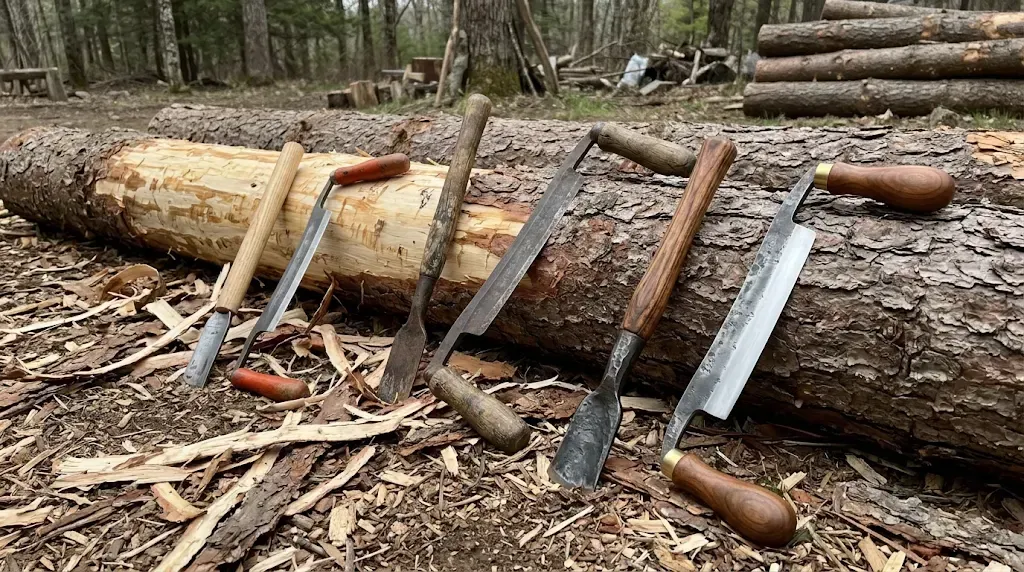
building log. A drawknife shaves and shapes, a bark spud lifts bark fast, and the right choice depends on the log, the season and how much you have to peel.
Drawknife or Bark Spud?
| Tool | Best for | Notes |
|---|---|---|
| Drawknife | Peeling with control, then shaping and smoothing | Pulled toward you in long strokes; works on both fresh and dry logs |
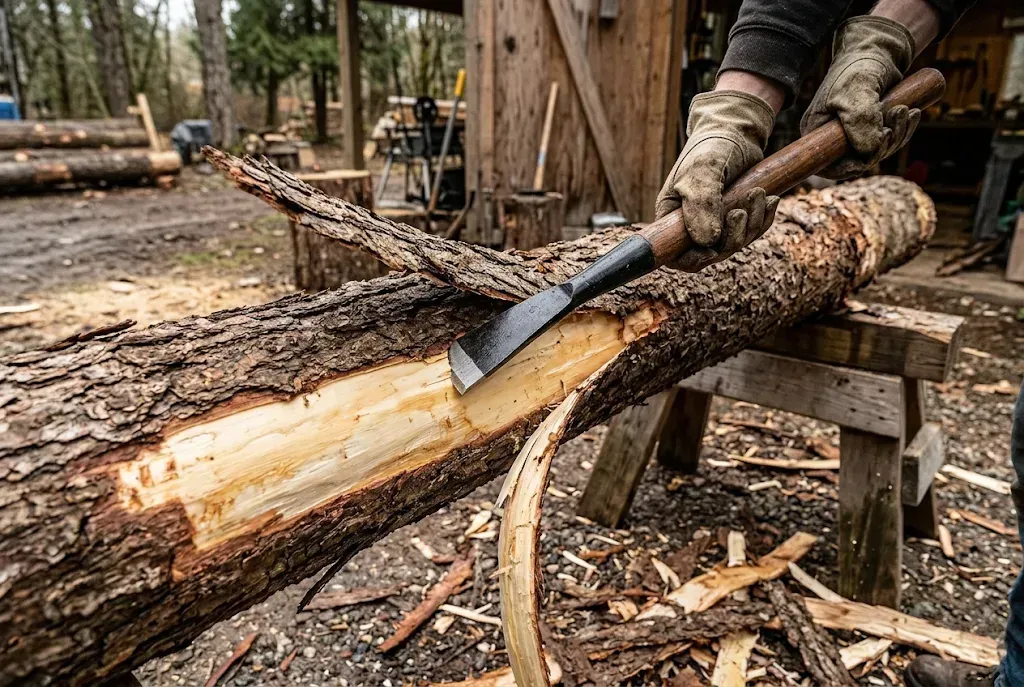
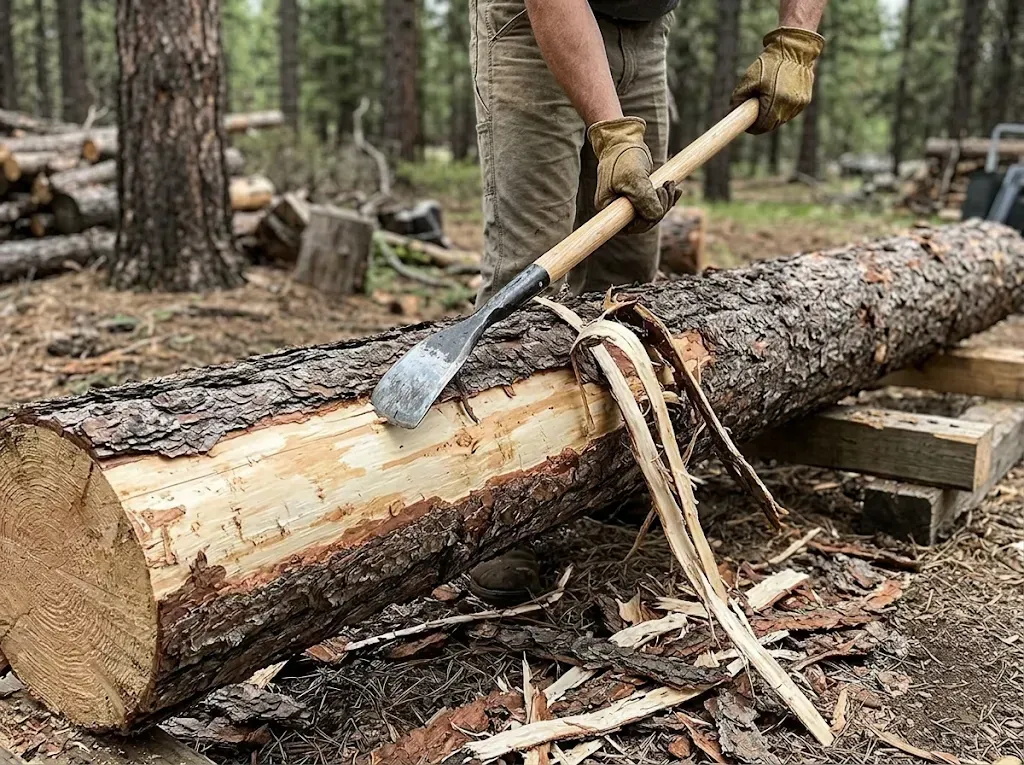
| Bark spud | Removing bark fast | Works best when bark separates easily, which is typically when trees are actively growing |
| Chainsaw peeler (Log Wizard) | Large volumes of logs | Needs a chainsaw and full chainsaw safety gear |
Most builders keep a
drawknife for finishing and add a spud when there is a lot of bark to move.
Curved or Straight Blade?
A
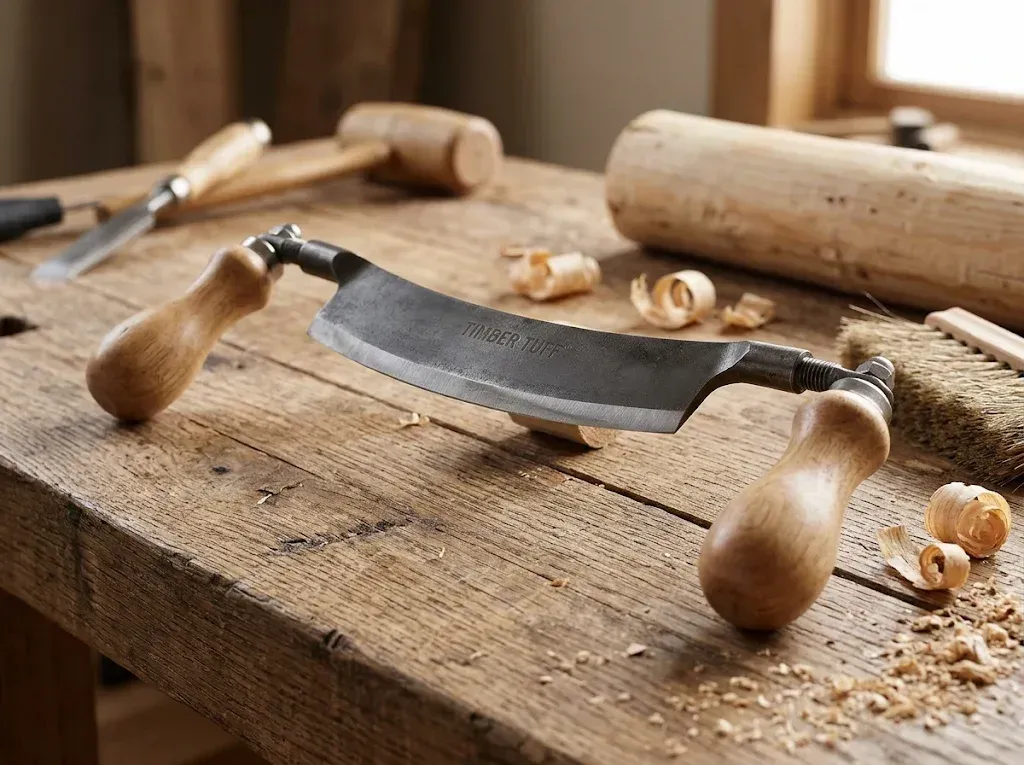
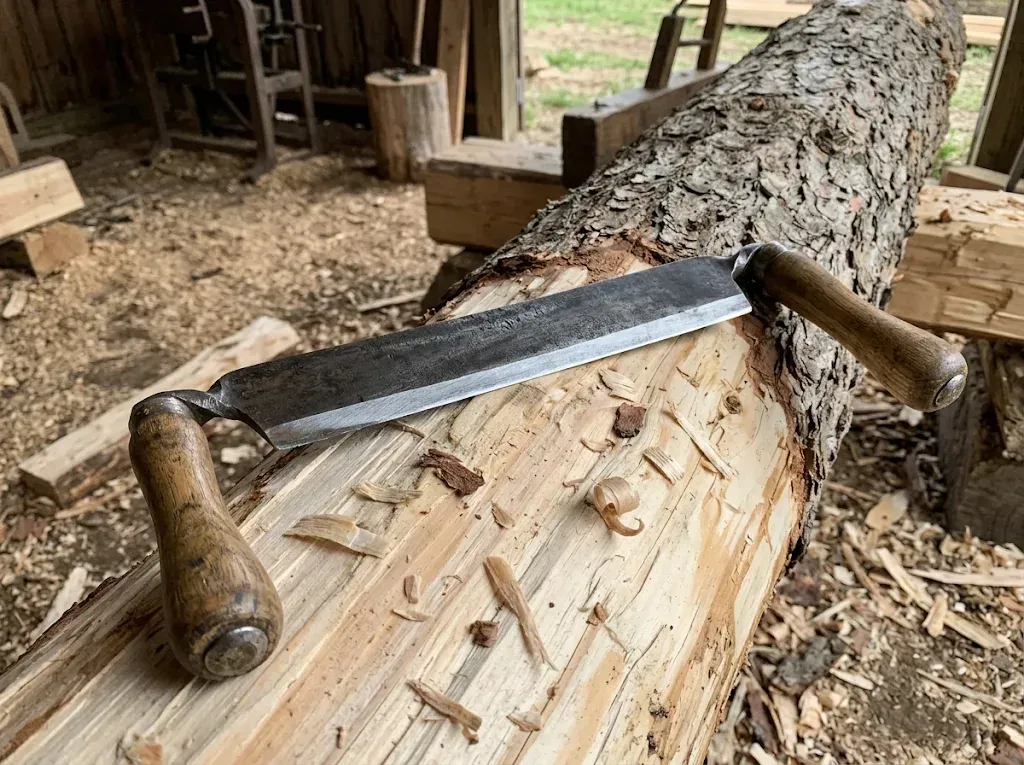
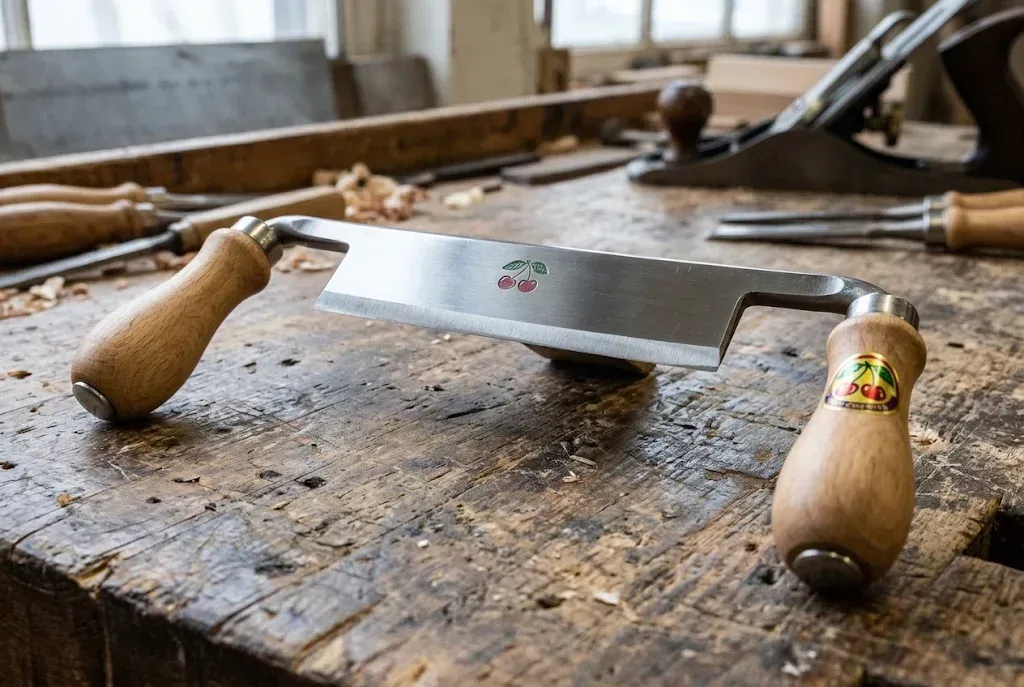
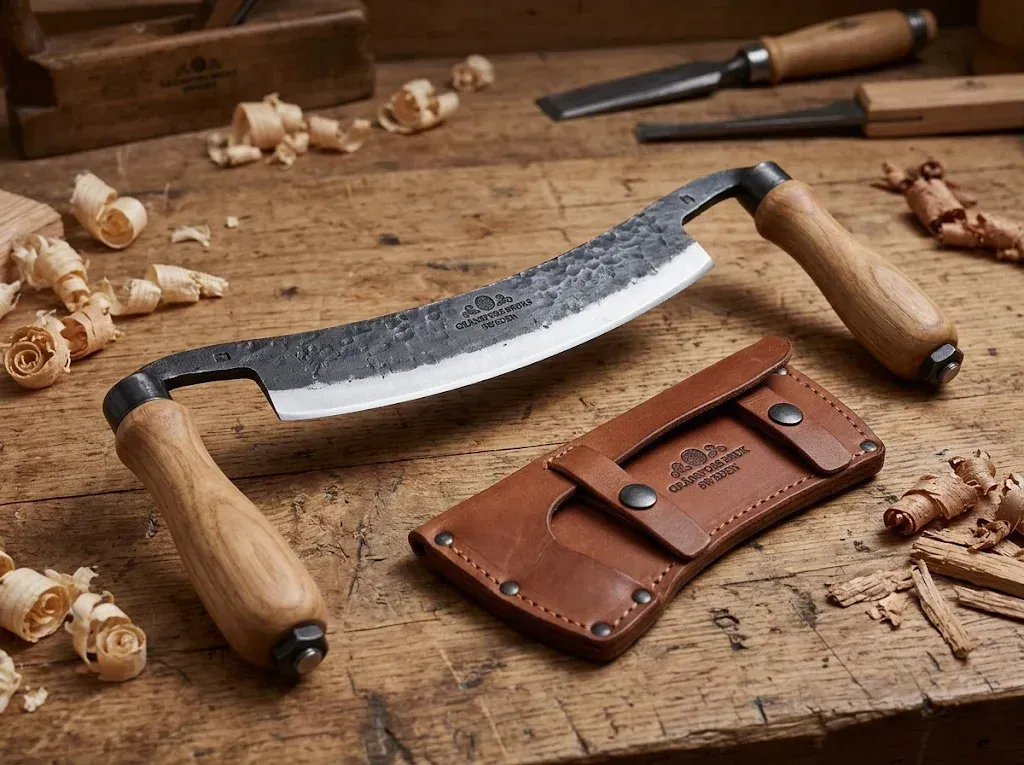
curved blade follows the round surface of a log, which makes it the usual choice for peeling. A straight blade is easier to control on flatter surfaces and for shaping. The Timber Tuff 5" and the Gransfors Bruks are curved. The Two Cherries comes in both a 9" straight and a 10" curved model.
Choosing by Budget
- Under $50: Timber Tuff 5" curved draw knife at $32.95.
- $50 to $125: Peavey 13"-16" at $82.00, Two Cherries 9" straight at $69.95, or Two Cherries 10" curved at $124.95.
- Professional grade: Gransfors Bruks curved drawknife at $305.00, hand forged in Sweden
- Lock the log in place with cleats before you start.
- Keep both hands on the handles and your body clear of the blade path.
- Wear gloves and sturdy boots.
- Keep the edge sharp, because a dull blade slips and takes more force.
Peeling Faster With a Chainsaw
The Log Wizard attaches to a chainsaw and debarks, planes and notches. Compare it with hand tools in our peeling guide.
Frequently Asked Questions
Pick a drawknife for control, a spud for speed, or both. Free shipping applies nationwide.
Drawknives & Bark Spuds