The Role of Hand Tools in Modern Log Construction
In an industry increasingly shaped by power tools and automation, it may be easy to assume that hand tools are becoming less relevant. However, in log construction, hand tools continue to play a central role. While modern equipment has improved efficiency in many areas, the precision and control required in log building still depend heavily on traditional methods.
Understanding how hand tools fit into modern workflows can help builders approach projects with greater confidence and consistency.
Precision Requires Control
Log construction is built on the principle of fit. Each log must align closely with the one beneath it to create a stable and well-sealed structure. Achieving that level of accuracy often requires fine adjustments that are difficult to accomplish with larger, faster tools.
Hand tools provide a level of control that allows builders to:
- Refine cuts with greater precision
- Adjust contours to match irregular surfaces
- Work carefully in areas where accuracy is critical
Rather than replacing power tools,
hand tools often complement them by handling the final stages of shaping and fitting.

Working With Natural Material
Unlike manufactured building materials, logs are not uniform. Each piece of wood has its own shape, density, and characteristics. This variability requires a flexible approach.
Hand tools are particularly well-suited for working with natural material because they allow builders to respond to subtle differences in each log. For example:
- A drawknife can be used to remove small amounts of material gradually
- A chisel can refine tight areas where precision is essential
- A
scribe helps transfer contours accurately between logs
This adaptability is difficult to replicate with tools designed for uniform materials.
Supporting Traditional Techniques
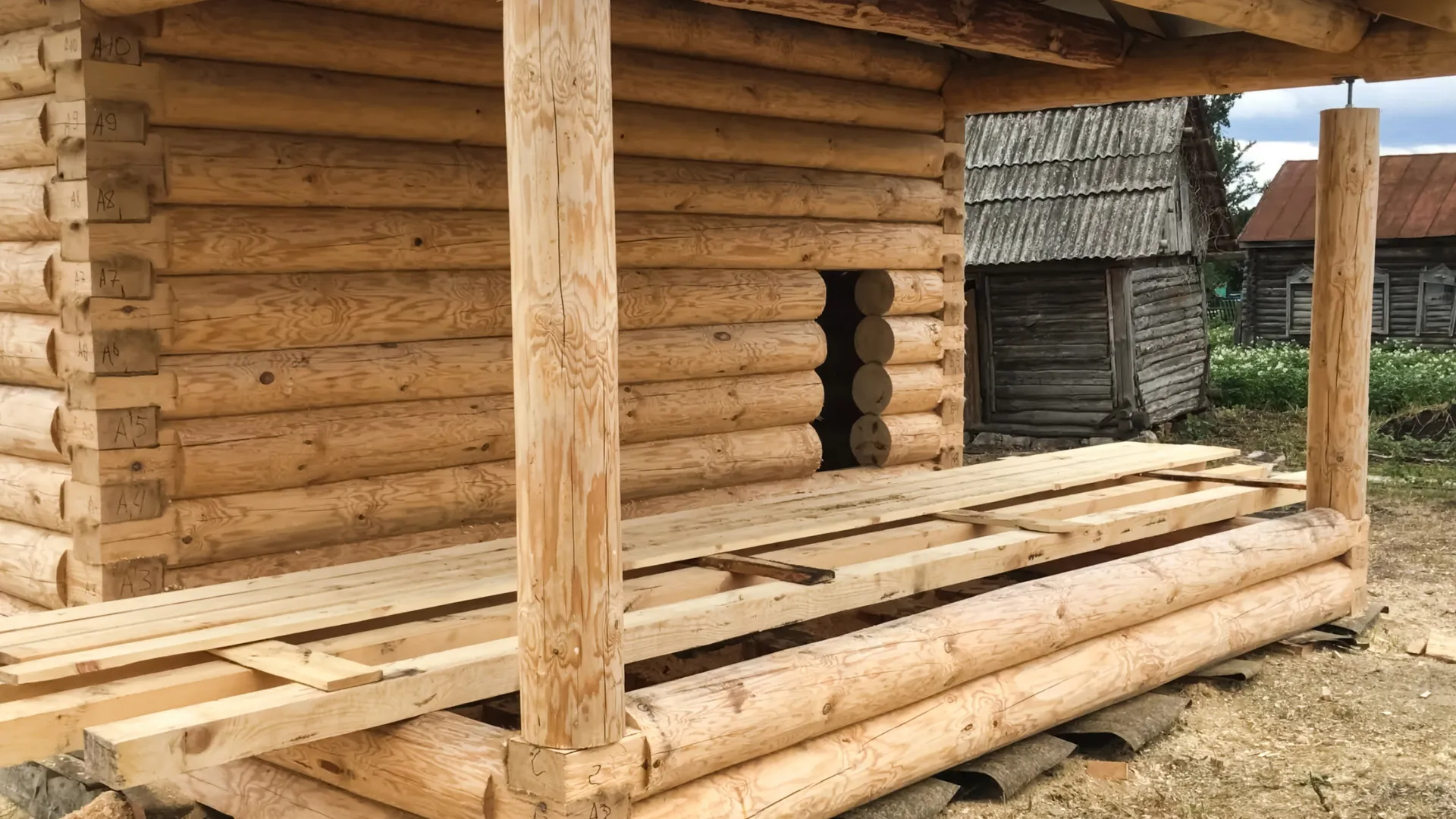
Many of the techniques used in log construction today are rooted in long-standing building practices. While modern tools have improved efficiency, the underlying methods remain largely unchanged.
Hand tools are integral to these techniques because they:
- Allow for detailed craftsmanship
- Support time-tested joinery methods
- Help maintain consistency throughout the build
Builders who understand how to use these tools effectively can apply traditional methods in a way that meets modern expectations.
Improving Efficiency Through Balance
It may seem counterintuitive, but incorporating hand tools into a workflow can actually improve efficiency. While power tools handle larger tasks quickly, hand tools help reduce the need for rework.
For example:
- Fine-tuning a cut with a chisel may prevent alignment issues later
- Carefully shaping a log with a drawknife can improve overall fit
- Using a scribe accurately can reduce errors before cutting begins
By addressing small details early, builders can avoid larger corrections later in the process.

Enhancing the Quality of the Finished Structure
The quality of a log structure is often defined by how well its components fit together. Gaps, uneven joints, and inconsistencies can affect both appearance and performance.
Hand tools contribute to a higher-quality result by allowing builders to:
- Achieve tighter fits between logs
- Maintain consistent alignment
- Refine surfaces for a cleaner finish
These improvements may not always be immediately visible, but they can influence the long-term performance of the structure.
Developing Skill and Confidence
Working with hand tools also plays a role in skill development. Builders gain a deeper understanding of how wood behaves and how different techniques affect the final result.
Over time, this experience can lead to:
- Greater confidence in handling complex tasks
- Improved accuracy in measurement and cutting
- A more efficient overall workflow
This progression is an important part of becoming a more capable builder.

A Practical Approach to Modern Building
Modern log construction does not require choosing between traditional and contemporary methods. Instead, it benefits from combining both.
Power tools provide speed and efficiency for larger tasks, while hand tools offer the precision needed for detailed work. Together, they create a balanced approach that supports both productivity and craftsmanship.
Kingsbridge Supply provides a wide selection of hand tools designed for real-world log building applications. Whether you are refining your technique or starting a new project, having the right tools can make a meaningful difference. Contact Kingsbridge Supply today to find the tools that support both precision and efficiency in your build.